3 · The second layer
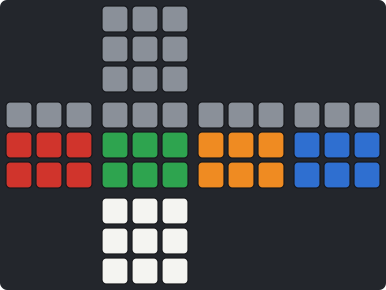
Four edges are left to place, the middle ones. None of them contains yellow — that is how you recognise them in the top layer.
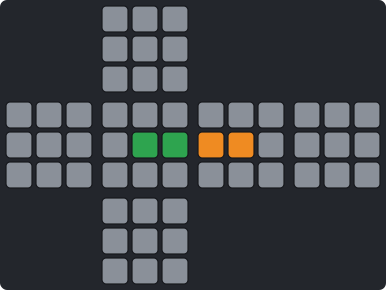
Spotting the right edge
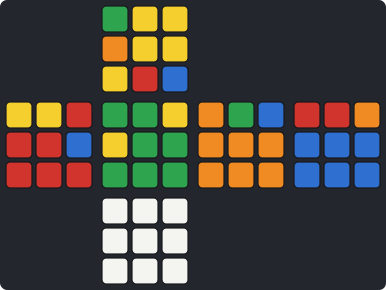
Look at the top layer and find an edge with no yellow. A green-orange edge, say.
Turn U until its front colour matches the centre of that face: if the edge
shows green on the side, bring it onto the green face. You then see an
upside-down T in a single colour on the front face.
The edge's other colour (the orange, on top) tells you which way it must go down: towards the orange face.
The two cases
There are only two, and the second is the exact mirror of the first.
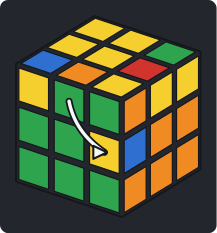
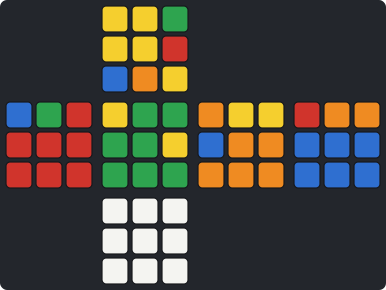
U R U' R' U' F' U F
The edge must go to the right. The T is in front of you, and the colour on top matches the centre of the right face.
U' L' U L U F U' F'
The edge must go to the left. Exactly the same sequence, mirrored:
every R becomes L, and every direction is reversed.
How to learn two algorithms at once
Do not learn them separately. Remember the right-hand version, then remember
the rule: replace R with L, U with U' and F with F'. Put the
two lines side by side and the symmetry jumps out.
No usable edge on top?
Sometimes all four top edges contain yellow while the second layer is not finished. That means an edge is already in the layer, but misplaced or flipped.
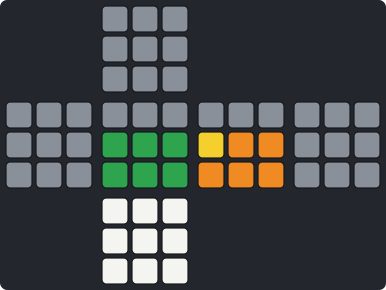
You have to eject it: put it in the front-right slot and apply the right-hand algorithm as if you were inserting something. The intruder comes up into the top layer, and you can treat it normally.
Check
The bottom two thirds of the cube are done: each side face shows two complete bands of its colour. Only the yellow layer is left.
From here on, you never turn the cube over again: yellow stays on top until the end.